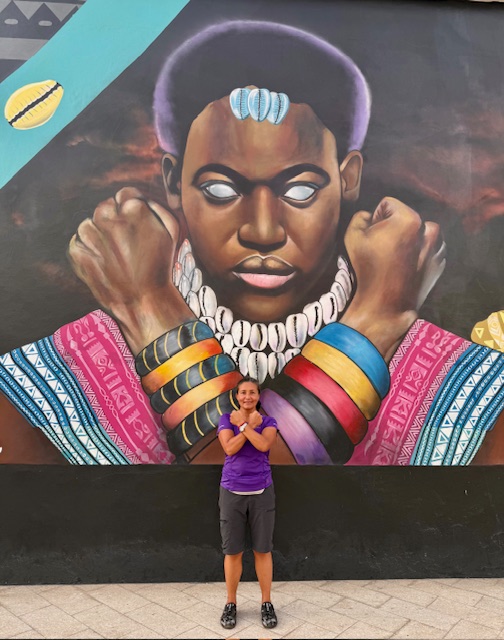
When We Turn Our Heads Back in Time

“Our telling of history needs to change, and our society needs to change.”

These words, spoken by Sonia Gutiérrez of the Poqomam Maya people, have stayed with me.

They remind me why I am so grateful for researchers, writers and people who dare to look at history again — not through the eyes of those who conquered, but by listening to those whose voices were silenced.

For centuries, cultures such as the Maya were described as mysterious, primitive, barbaric or even lost. Yet the Maya developed sophisticated writing and mathematical systems, studied the movements of celestial bodies with remarkable precision, and built magnificent cities such as Tikal and Copán, long before Europeans arrived in the Americas.

And then came #conquest.

History has a way of making such losses sound inevitable. They were not.
In the 16th century, Spanish colonisation brought forced labour, religious persecution and epidemics that devastated Maya communities. Sacred knowledge was destroyed. In 1562, Bishop Diego de Landa ordered the burning of Maya books, believing them to contain dangerous superstition. Only four pre-Columbian Maya codices are known to have survived. Imagine the knowledge that disappeared into those flames! The stories, the prayers, the observations of the stars, the memory of a people — reduced to ashes by those who believed they had the authority to decide what was worth preserving.

It is often said that history is written by the victors. And too often, those who were conquered had to be diminished before their suffering could be justified. Their cultures were called inferior, their beliefs dismissed, their humanity questioned.

After travelling in West Africa — and especially in Benin — I found myself thinking about this again, through the history of the transatlantic slave trade.

Between the 16th and 19th centuries, an estimated 12.5 million African men, women and children were forcibly embarked on slave ships bound for the Americas. Around 10.7 million survived the crossing. These were not simply numbers in a statistical record. They were human beings, torn from their families, their languages, their communities and the landscapes that had shaped their lives.

Enslaved people were forced to labour in plantations, mines and households, generating wealth that helped shape economies on both sides of the Atlantic. The trade was sustained by a vast economic system involving European empires, merchants and plantation owners, as well as African states and intermediaries who participated in the capture and sale of people. Its consequences reached far beyond the shores of Africa and… Madagascar!

Here, the history came unexpectedly closer to home.
In my own search, I began to discover traces of Malagasy people among the enslaved populations of Louisiana. People taken from an island that is a part of my own story, carried across oceans into a world that was not theirs by choice. Their names, their lives, their descendants — some traces remain, scattered across archives and generations. Others may have disappeared into the silences of history.

For me, this discovery made the history of slavery feel unexpectedly intimate. Madagascar was no longer only the place I had left behind. It was also part of a story carried across the Atlantic, a story whose echoes may still be heard in Louisiana today. I found myself wondering what survived the brutal crossing. Words, customs, a memory passed quietly from one generation to the next? And how much of a person’s identity can be taken away before some resilience still finds a way to endure?

In places such as Ouidah, in present-day Benin, the past is still written into the landscape. The Route of the Slave leads towards the Atlantic, tracing the final steps of people who were imprisoned, sold and forced aboard ships. Today, the Door of No Return stands as a memorial to those who left under such terrible circumstances — and to the families and descendants whose histories were forever altered.

In Ghana, standing at Assin Manso, a place connected to the inland slave trade, I felt the distance between past and present grow strangely thin. History no longer seemed safely contained in books or museums. It was there, beneath my feet. And I began to understand that remembering is not simply an act of looking backwards. It is also a way of seeing the present more clearly. Because the legacy of slavery did not end when the ships stopped sailing. It lives on in patterns of inequality, in racial prejudice, in the stories societies choose to tell — and in the stories the conquerors continue to leave out.

Yet these histories are not only stories of suffering. They are also stories of resistance, survival, creativity and extraordinary human resilience. The people who endured enslavement were never merely victims of history. They were individuals with names, dreams, knowledge, beliefs and lives that mattered. Their descendants continue to carry, reshape and reclaim that inheritance.

Perhaps this is what moves me most when I travel: the possibility of looking beyond the familiar version of a story. Of standing in a place and allowing its silences to speak. Of recognising that what we call a new land may have been someone else’s home for thousands of years. That what we call a lost civilisation may simply be a civilisation whose story we have failed to hear and tell.

Changing how we tell history is not about inheriting guilt for the actions of those who came before us. It is about accepting the responsibility to look honestly, to listen more carefully, and to restore dignity where it has been denied.

It is about understanding that civilisations were not simply discovered — they were often disrupted. That enslaved people were not workers who happened to migrate — they were human beings stolen from their lives. That knowledge was not always lost to time — sometimes, it was deliberately destroyed.

And perhaps, when we turn our heads — and our hearts! — back in time, something begins to shift.

The ruins become more than stones.
The names become more than dates.
The people who once seemed distant become familiar, human.

People who loved, feared, hoped and dreamed, just as we do.

Perhaps that is where a different kind of future becomes possible.
Not so different after all.

Over the years, I’ve come to appreciate that the things we enjoy most in life aren’t always the things we once thought we needed.

I’ve known a life of comfort — first-class flights, beautiful hotels, memorable meals. And I enjoyed it. Why wouldn’t I? But as time went by, I found myself drawn to other things: simpler experiences, unexpected encounters, the freedom to explore without needing everything to be planned or polished.

Perhaps it’s not so much about wanting less as about discovering what is enough. And for me, more and more, that means having the freedom to travel, to be curious, and to feel at home in the unfamiliar.

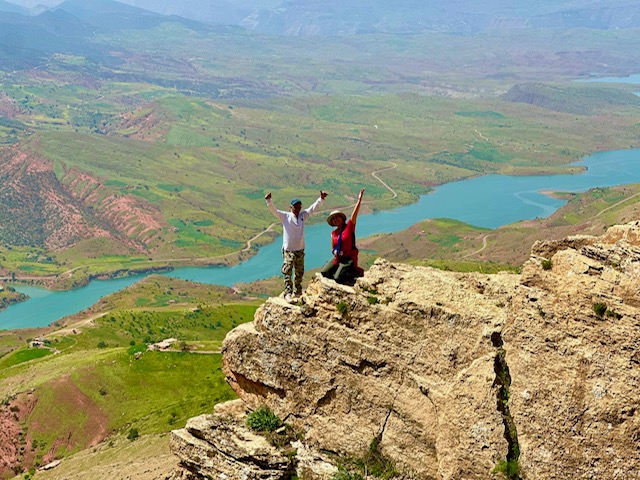
Recently, in the Atlas Mountains, I had a conversation with Mehjid, our guide, and his donkey…

In his broken French, Mehjid told me about his own idea of luxury: his nomadic life. He has travelled beyond his village, to nearby towns and places just outside the familiar boundaries of his everyday world. Nothing extravagant, perhaps, by conventional standards. But these little journeys bring him joy. They give him something to look forward to, something that helps him carry the ordinary days with a little more lightness.

I understood him more than I could have explained.

Our lives may look very different — economically, socially, culturally — but, sitting there in the Atlas Mountains, I felt how much we shared. That same curiosity about what lies beyond the familiar. What makes us feel alive is often much simpler than we imagined. The desire to discover, to experience something new, to feel the world opening up around us. Perhaps the shape of our journeys matters less than what draws us towards them.

And perhaps this, too, is a kind of wealth.

These days, when I plan my year, I begin with the essentials: what I need to cover my basic expenses. Then I look at where I would love to go, which journeys truly matter to me, and what they might cost. The rest, somehow, has to be enough.

I’ve discovered that I can live on very little when I need to. Instant noodles and porridge are perfectly acceptable companions to a life of adventure. 😊 I’m completely happy to fly economy if it means travelling farther, more often. I no longer need every part of the journey to be comfortable. Nowadays, it’s the destination — even the unexpected detour — that matters most.

Mehjid, in his own way, has found a little resourcefulness of his own. He brings back small souvenirs from his travels and sells them to tourists looking for what they believe to be authentic Amazigh art (I choose the name Amazigh, Imazighen for the plural rather than Berber for its negative connotation).
Different lives, different ways of making things work, but perhaps a shared understanding that a little ingenuity can open doors.

When people ask me why I travel, I sometimes struggle to give a simple answer. Ever since I left Madagascar, I’ve been searching for a place that feels like home. I’m not entirely sure what I’m looking for, or whether it’s a place at all. Something keeps calling me out into the world, and I’ve learned to listen. I follow my curiosity, my intuition, and the occasional inexplicable pull towards somewhere I know very little about.

Perhaps I’m not travelling to find a place where I belong, but to discover what belonging means to me?

And so, the real gift of travel are not the places I visit, the landscapes I admire, or even the experiences I collect. It is the unexpected moments of connection, of recognition — when someone whose life seems so far removed from mine suddenly feels familiar.

Mehjid, riding his donkey through the Atlas Mountains. And me, behind the wheel of my ageing 4×4, setting off towards new horizons.

Two different lives. Two very different journeys.

And yet, not so different after all.

Albania — a country that found its way into my heart

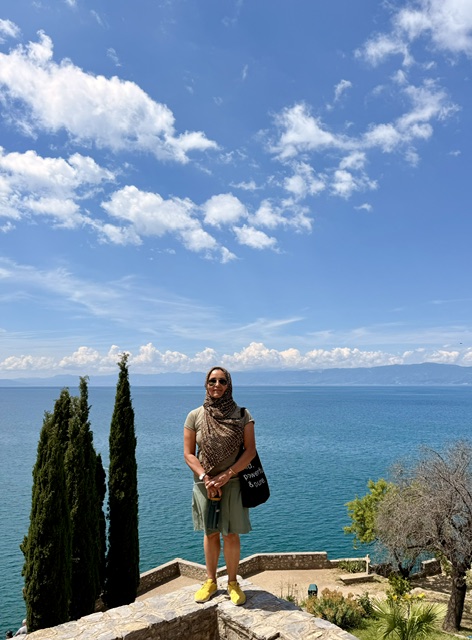
There are places we visit, and then there are places that awaken something in us. Albania has done just that.

I fell in love with its wild, untamed beauty — the mountains rising towards the sky, the rivers carving their way through deep valleys, the forests covering the hillsides, and the very, very blue sea stretching endlessly towards the horizon. There is something about this landscape that speaks to my heart. Perhaps it’s the feeling of space, of freedom, of nature still allowed to be a little wild. Or perhaps it’s simply the joy of being somewhere that makes me want to keep exploring.

Gjirokastër is the birthplace of the celebrated Albanian novelist Ismail Kadare. His writing often draws on the city’s haunting atmosphere and Albania’s complex history. During Enver Hoxha’s communist regime, writers like Kadare were allowed a way to explore political realities that could not always be addressed directly.

Googling Ismail Kadare, I came across his Longing for Albania. His words seem to capture something of what I felt:

“I was filled with longing for Albania,
For that great, wide and deep sky,
For the azure course of the Adriatic waves,
For the Albanian Alps with their white hair and green beards…”

I had only just begun to discover Albania, yet I understood that longing. The mountains, the vast sky, the blue of the sea — they had already found a place in me. Perhaps this is how attachment to a country begins: not with knowing it, but with feeling unexpectedly at home in its landscapes.

Gjirokastër, the City of Stone, clings to the hillsides above the Drino River valley. Its steep cobbled streets climb to the imposing fortress that seem to grow out of the mountains themselves. Walking through this UNESCO-listed old town, I felt as though I were wandering through the pages of another century, like I had once been part of it.

I explored the fortress, wandered through the Old Bazaar and admired the traditional stone houses. I could easily have spent hours discovering the city on foot — if only the afternoon heat hadn’t turned those beautiful cobblestones into an exhausting obstacle course – especially with thin soled barefoot shoes! 😊

Further south, at Butrint, history and nature seemed to merge into one. According to legend, the city was founded by refugees from Troy after the Trojan War. Archaeology tells a more complex story, beginning with its development as a Greek settlement. Today, this UNESCO World Heritage Site preserves more than 2,500 years of human history, surrounded by lush vegetation, water and the quiet beauty of its natural setting.

And then, the Ionian Sea.

The Ionian holds some of the deepest waters in the Mediterranean, including the Calypso Deep, which plunges more than 5,000 metres. Imagine what lies beneath that vast blue surface! My diver’s fantasy went wild…

After a delicious lunch, we swam in its wonderfully clear waters, with the dramatic coastline stretching around us. I wish I could share photographs, but I was far too busy floating in the waves, soaking up the moment and invoking the God of the Seas — Neptune, alias Poseidon.
For centuries, sailors entrusted their journeys to Poseidon, leaving offerings in the hope of safe passage and calm seas. I left a coin on the beach. One never knows when a little divine goodwill might come in handy. 😉

What stays with me most, though, is not any single monument or destination. It is the feeling of Albania itself — the mountains, the rivers, the forests, the sea. The way history and nature seem to accompany one another, and how often I found myself wanting to stop, look around and simply take it all in. And a final, wonderfully simple memory: being spoonfed freshly extracted honey by our beekeeper, Mr. Landi. Nothing quite like tasting a little sweetness straight from the source. 🐝

I came to discover a country. I left with a longing to return. I have a feeling Albania has only just begun to reveal itself to me. But there are still so many roads to wander, rivers to follow, mountains to cross and stories to hear.

#iamawanderer #Travelmaniac #Peopleandstories

Kosovo

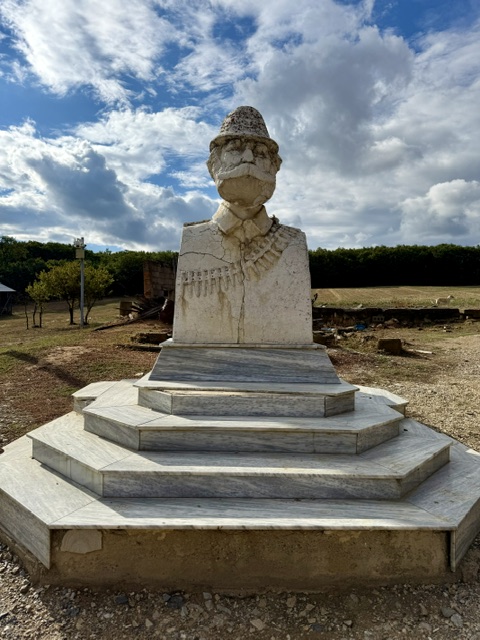
Visiting the Jashari Memorial Complex in Prekaz.

Adem Jashari has become a symbol of armed resistance and sacrifice for many Kosovo Albanians. He was a founder and commander of the Kosovo Liberation Army (UÇK/KLA), an ethnic Albanian guerrilla force that fought Serbian and Yugoslav forces during the Kosovo War (1998–1999), seeking Kosovo’s independence. It was formally disbanded in 1999. Its legacy remains deeply significant—and contested!—among Albanians and Serbs.

Listening to our guide, I understand that the Jashari family memorial in Prekaz is one of the most emotionally and politically significant places in Kosovo. What struck me most was the disturbing contrast:
the cemetery felt monumental and peaceful, while the bullet-scarred houses nearby made the violence painfully tangible.

Travelling through the Balkans, I find myself wondering why war and conflict seem to occupy such a large part of the story of these countries. Sitting on a stone bench outside the museum, my head started spinning:

”Why have the peoples of the Balkans fought each other so many times?”

The answer, of course, is not simple. The peoples of the Balkans have fought repeatedly over centuries — but they have also lived together for centuries.

Perhaps that is the fascinating part to remember while travelling here: a place can have been Ottoman, Serbian, Albanian, Yugoslav — and something else again — without its history ever belonging neatly to just one identity?

People have shared these lands, cities, markets, languages, food and traditions for generations, despite their differences.

So why did that coexistence sometimes break down so catastrophically?

I feel in my heart that the Balkans are so much more than their wars.

The Balkans are a rich tapestry of extraordinary food and music, Ottoman and Venetian influences, Orthodox and Catholic traditions, mosques and churches, mountains and rivers, ancient cities and — above all — generations of people, cultures and traditions woven together through centuries of shared history, sometimes harmonious, sometimes marked by conflict.

And, of course, the Illyrians — ancient tribes, fierce warriors, and a legacy that still echoes through the region. Many Albanians, including Kosovo Albanians, consider themselves descendants of these ancient peoples. While the precise historical and linguistic links remain debated, Illyrian heritage continues to hold a meaningful place in Albanian identity. It is one of the many threads connecting the present to a distant, fascinating past.
I love it when the Universe (or synchronicity) gets playful. The name of our eminent guide in Prishtina was Ilir — a name rooted in ancient Illyria, and carrying the spirit of freedom. The Albanian word i lirë means “free.”

The Balkans are so much more than the conflicts that have shaped their history. They are a place of extraordinary depth, where beauty and sorrow, memory and reinvention, seem to exist side by side.

I hope to return, with more time to listen to its stories, discover its hidden corners, and understand a little more of the many layers that make this part of the world so captivating.

Förlåt mig!

Machu Picchu Hiking Forgiveness

När jag gick bland Andernas massiva berg och gröna platåer försökte jag memorera hållplatsernas namn och några ord på quechua: Ollantaytambo, Pacamayo, Urubamba, Inti Punku, Machu Picchu. Orden blev som ett mantra i rytm med mina steg. Den (för mig hög) fysisk ansträngning försatte mitt sinne i någon sorts meditation eller trans. Jag började komma ihåg ”glömda” händelser från mitt tidigare liv (jag menar när jag var yngre och inte en reinkarnation), från barndomen på Madagaskar, student- och ungdomsåren i Paris, Schweiz och Italien, och även vuxentiden i Sverige.

På vägen upp till 4 215m var min kropp trött och svettig och min själ gjorde ont. I takt med att dropparna som rann längs ryggraden och mellan brösten rensade bort slaggprodukter började även mina tankar och känslor städas. Hela min hud var salt, av svett och tårar. I vårt vandringsgäng var vi 12 personer: jag, 51 år och elva tjejer och killar i åldrar mellan 27 och 18. När ungdomarna satt och vilade, gick jag sakta, sakta vidare. De kom snabbt ifatt mig, gick om och väntade igen vid nästa hållplats. Tröttheten och monotonin gjorde att det ibland kändes som om jag inte var riktigt vaken, jag fick tillbakabilder som liknade drömmar. Jag pendlade mellan upplyft leende och andfådd ledsenhet med inslag av tårblind ilska.

Tankarna trängde sig mellan mina nya quechuanska ord. Jag har inte alltid varit snäll mot mig själv. Jag har alldeles för ofta piskat mig fram till det jag försökte vara för att bli älskad men som inte alltid var jag. Jag har låtit andra rita min karta och undrat varför jag gick vilse. Jag har ljugit för mig själv om vad jag behövde och blivit ledsen när jag fick som jag önskade. När jag blev sjuk (utmatningsdepression är ett sjukdomstillstånd) och läkaren ville sjukskriva mig så vägrade jag stanna till. Jag vågade inte möta sanningen om hur ensam jag kände mig och hur trött jag var på att kämpa för att hålla upp fasaden. Jag valde att inte höra mitt hjärta gråta och jag stängde av mina sinnen för att inte lyssna på kroppen.

Sista natten på campingen sov jag knappt. Delvis för att någon av tjejerna i tältet bredvid snarkade så högt och kraftfullt vibrerande och delvis för att jag översköljdes av känslor av vemod, skam, sorg, ånger och slutligen, beslutsamhet och hopp. Livet blev som det blev och jag har alltid gjort mitt bästa under rådande omständigheter. Jag fick det jag vågade be om för det är så det är, är man tyst så hörs man inte.

Tyst och stilla började jag gråta (jag ville inte väcka min son som vilade i sin korviga sovsäck) och fram kom en bön.

Förlåt!

Jag förlåter mig själv

för allt elakt jag har sagt om mina drömmar och behov

för att jag har ibland svält eller tvångsmatat min kropp

för alla brutna löften jag har förlåtit

för alla timmar jag har väntat på en man som var hos en annan kvinna

för alla pengar jag blev lurad på av släkt och vänner

för all villkorlig kärlek där jag inte fick min beskärda del

för alla människor jag har försökt behaga

för alla lögner jag har trott på

för alla gånger jag har velat säga nej men tvingat mig själv att göra tvärtom

för att jag inte har älskat mig själv och för ofta valt bort mitt eget bästa.

Förlåt! Det ska aldrig ske igen.

Nu vet jag att jag är värd all kärlek i världen. Inte bara ifrån andra men mest ifrån mig själv. Jag kommer att leva med mig själv resten av livet (yep!) och det blir roligare om jag är min bästa vän och supporter. Så från och med nu ska jag alltid vara den viktigaste personen i mitt liv för jag är värd glädje, ro, ljus, värme, sanning och kärlek. Precis som alla andra människor på Jorden, utan åtskillnad av något slag – särskilt inte i fråga om ras, hudfärg, kön, ålder, social status eller tro.

#regnbågskärlek #loveistheanswer

” When you forgive, you in no way change the past – but you sure do change the future.”

~Bernard Meltzer

Ett litet steg i taget…

Machu Picchu Bucket list Dreams come true

…och så regelbundna rörelser och andetag som möjligt.

Sakta, sakta men inte stanna.

Hitta rytmen i huvudet.

Bjud in luften i lungorna.

Tacka kroppen för att den vill mer än den tror.

Njut av brinnande muskler och svettig rygg.

Upplev smärtan i foten och knät och tacka dem för att de håller en höjdmeter till. Och en till.

Titta bakom och se hur långt du har kommit och hur vackert Moder Jord ligger under och omkring dig.

Kom ihåg vart du vill men titta inte upp och kolla inte hur långt det är kvar att stiga.

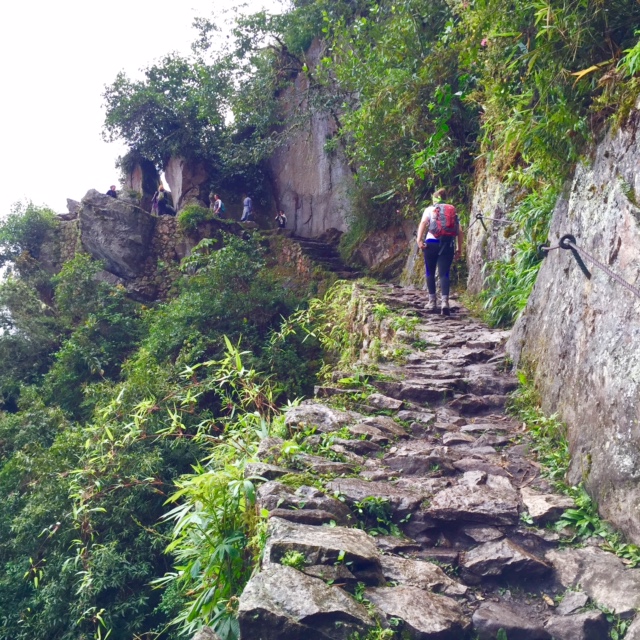
Upp, upp, upp, upp. Upp till 4 215m över havet: välkommen till Abra Warmiwanusca eller Dead Woman’s Pass (något litet skrämmande namn). Du klarade den svåraste etappen! Hela kroppen skakar. Du gråter av lycka.

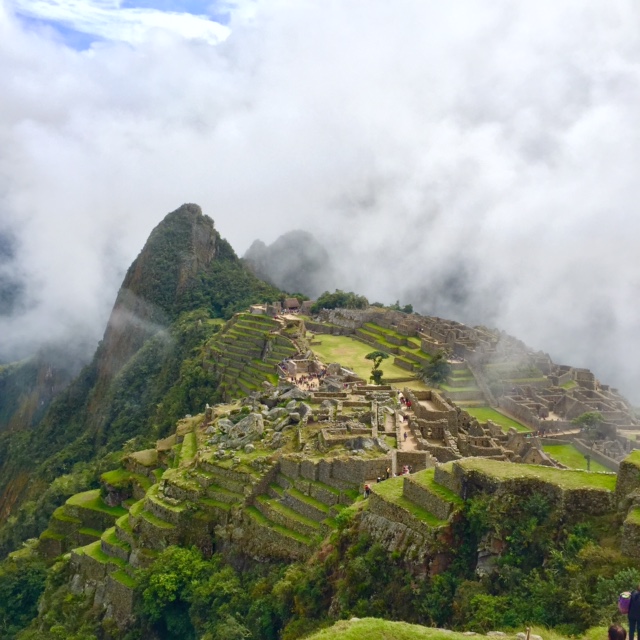
Jag har inte kunnat (velat?) skriva under veckorna i Peru, jag lyckades skicka iväg ETT vykort. Jag tror det är för att jag var rädd att inte kunna hålla kvar mina känslor, insikter, upplevelser inom mig om jag klädde (av) dem i ord. Även idag har jag svårt att skriva om mötet med Andernas drottning: Machu Picchu. Jag har drömt om henne sen jag var åtta år gammal (och ja, för mig är berget en moderlig och drottninglik hon). Så det får vänta, magin får göra sitt, i sin egen takt, ett litet steg i taget.

”A dream doesn’t become reality through magic; it takes sweat, determination and hard work.”

Colin Powell