What are you afraid of?


I’m getting ready for my next trip, and somewhere beneath the excitement, I feel a small tremor of apprehension.
It’s unusual for me.
Normally, I cannot wait to be at the airport, carried along by the thrill of new places, new faces, new stories.
The butterflies of adventure are usually enough to drown out everything else.
But this time, something else seems to be flying among them.
A quieter kind of butterfly.
Something I can’t quite name.
I don’t know what I’m afraid of…
And perhaps that is what makes it unsettling.

What are you afraid of?
I have learned never to judge someone by the way they deal with fear.
Some people retreat into silence, almost paralysed by it.
Others step out into the world, smile, carry on, and pretend everything is fine. They are scared, but they do it anyway.
We rarely know what is happening beneath the surface.
We don’t know what someone is carrying.
We don’t know what fear is asking them to protect.
Perhaps courage doesn’t always look like fearlessness.
Sometimes it looks like taking the next step with trembling hands, without even knowing exactly what you are afraid of.

Fear can make us withdraw.
Fear can make us run.
Fear can also make us act.
We rarely know what is happening beneath the surface.
We don’t know what motivates someone’s behaviour.
We don’t know what fear they are carrying.
And sometimes, the person who looks the bravest is simply the one who has learned how to move forward while being afraid.

Fear can be a liar.
It takes what happened in the past and projects it onto the future, making us believe that because something happened once, it will happen again.
Fear can make us abandon dreams before we have even given them a chance.
It can narrow our view of the future until all we can see are the things that might go wrong.

Fear is not only a dream killer.
It can be a leadership killer.
We may see confidence, control, silence or even aggression — but we don’t always see the fear underneath.
Fear of failure.
Fear of losing control.
Fear of being rejected.
Fear of not being good enough.
When fear takes the driver’s seat, we stop listening, stop trusting, avoid difficult conversations and make decisions from self-protection rather than purpose.

Perhaps good leadership starts with understanding that fear has a seat at the table — but it shouldn’t be the one making the decisions.
Good leadership doesn’t require the absence of fear.
It requires the courage to notice it — and not let it decide.
Because fear also has a purpose.
It is trying to protect us.

So perhaps we don’t need to fight it.
Invite fear to sit with you.
Listen to what it has to say.
Thank it for trying to keep you safe.
And then decide for yourself whether you still want to follow it.
Because fear is not a prophecy.
It is a feeling.
And sometimes the bravest thing we can say to fear is simply:
I hear you. Thank you. But I’m okay.

I shall pack now ❤️

When We Turn Our Heads Back in Time

“Our telling of history needs to change, and our society needs to change.”

These words, spoken by Sonia Gutiérrez of the Poqomam Maya people, have stayed with me.

They remind me why I am so grateful for researchers, writers and people who dare to look at history again — not through the eyes of those who conquered, but by listening to those whose voices were silenced.

For centuries, cultures such as the Maya were described as mysterious, primitive, barbaric or even lost. Yet the Maya developed sophisticated writing and mathematical systems, studied the movements of celestial bodies with remarkable precision, and built magnificent cities such as Tikal and Copán, long before Europeans arrived in the Americas.

And then came #conquest.

History has a way of making such losses sound inevitable. They were not.
In the 16th century, Spanish colonisation brought forced labour, religious persecution and epidemics that devastated Maya communities. Sacred knowledge was destroyed. In 1562, Bishop Diego de Landa ordered the burning of Maya books, believing them to contain dangerous superstition. Only four pre-Columbian Maya codices are known to have survived. Imagine the knowledge that disappeared into those flames! The stories, the prayers, the observations of the stars, the memory of a people — reduced to ashes by those who believed they had the authority to decide what was worth preserving.

It is often said that history is written by the victors. And too often, those who were conquered had to be diminished before their suffering could be justified. Their cultures were called inferior, their beliefs dismissed, their humanity questioned.

After travelling in West Africa — and especially in Benin — I found myself thinking about this again, through the history of the transatlantic slave trade.

Between the 16th and 19th centuries, an estimated 12.5 million African men, women and children were forcibly embarked on slave ships bound for the Americas. Around 10.7 million survived the crossing. These were not simply numbers in a statistical record. They were human beings, torn from their families, their languages, their communities and the landscapes that had shaped their lives.

Enslaved people were forced to labour in plantations, mines and households, generating wealth that helped shape economies on both sides of the Atlantic. The trade was sustained by a vast economic system involving European empires, merchants and plantation owners, as well as African states and intermediaries who participated in the capture and sale of people. Its consequences reached far beyond the shores of Africa and… Madagascar!

Here, the history came unexpectedly closer to home.
In my own search, I began to discover traces of Malagasy people among the enslaved populations of Louisiana. People taken from an island that is a part of my own story, carried across oceans into a world that was not theirs by choice. Their names, their lives, their descendants — some traces remain, scattered across archives and generations. Others may have disappeared into the silences of history.

For me, this discovery made the history of slavery feel unexpectedly intimate. Madagascar was no longer only the place I had left behind. It was also part of a story carried across the Atlantic, a story whose echoes may still be heard in Louisiana today. I found myself wondering what survived the brutal crossing. Words, customs, a memory passed quietly from one generation to the next? And how much of a person’s identity can be taken away before some resilience still finds a way to endure?

In places such as Ouidah, in present-day Benin, the past is still written into the landscape. The Route of the Slave leads towards the Atlantic, tracing the final steps of people who were imprisoned, sold and forced aboard ships. Today, the Door of No Return stands as a memorial to those who left under such terrible circumstances — and to the families and descendants whose histories were forever altered.

In Ghana, standing at Assin Manso, a place connected to the inland slave trade, I felt the distance between past and present grow strangely thin. History no longer seemed safely contained in books or museums. It was there, beneath my feet. And I began to understand that remembering is not simply an act of looking backwards. It is also a way of seeing the present more clearly. Because the legacy of slavery did not end when the ships stopped sailing. It lives on in patterns of inequality, in racial prejudice, in the stories societies choose to tell — and in the stories the conquerors continue to leave out.

Yet these histories are not only stories of suffering. They are also stories of resistance, survival, creativity and extraordinary human resilience. The people who endured enslavement were never merely victims of history. They were individuals with names, dreams, knowledge, beliefs and lives that mattered. Their descendants continue to carry, reshape and reclaim that inheritance.

Perhaps this is what moves me most when I travel: the possibility of looking beyond the familiar version of a story. Of standing in a place and allowing its silences to speak. Of recognising that what we call a new land may have been someone else’s home for thousands of years. That what we call a lost civilisation may simply be a civilisation whose story we have failed to hear and tell.

Changing how we tell history is not about inheriting guilt for the actions of those who came before us. It is about accepting the responsibility to look honestly, to listen more carefully, and to restore dignity where it has been denied.

It is about understanding that civilisations were not simply discovered — they were often disrupted. That enslaved people were not workers who happened to migrate — they were human beings stolen from their lives. That knowledge was not always lost to time — sometimes, it was deliberately destroyed.

And perhaps, when we turn our heads — and our hearts! — back in time, something begins to shift.

The ruins become more than stones.
The names become more than dates.
The people who once seemed distant become familiar, human.

People who loved, feared, hoped and dreamed, just as we do.

Perhaps that is where a different kind of future becomes possible.

Not so different after all.

Over the years, I’ve come to appreciate that the things we enjoy most in life aren’t always the things we once thought we needed.

I’ve known a life of comfort — first-class flights, beautiful hotels, memorable meals. And I enjoyed it. Why wouldn’t I? But as time went by, I found myself drawn to other things: simpler experiences, unexpected encounters, the freedom to explore without needing everything to be planned or polished.

Perhaps it’s not so much about wanting less as about discovering what is enough. And for me, more and more, that means having the freedom to travel, to be curious, and to feel at home in the unfamiliar.

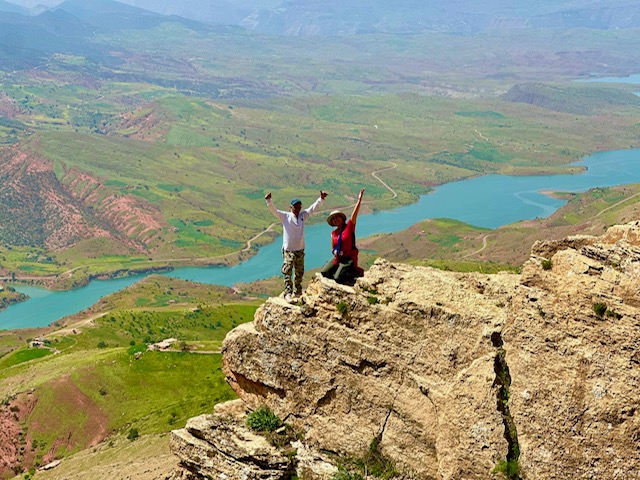
Recently, in the Atlas Mountains, I had a conversation with Mehjid, our guide, and his donkey…

In his broken French, Mehjid told me about his own idea of luxury: his nomadic life. He has travelled beyond his village, to nearby towns and places just outside the familiar boundaries of his everyday world. Nothing extravagant, perhaps, by conventional standards. But these little journeys bring him joy. They give him something to look forward to, something that helps him carry the ordinary days with a little more lightness.

I understood him more than I could have explained.

Our lives may look very different — economically, socially, culturally — but, sitting there in the Atlas Mountains, I felt how much we shared. That same curiosity about what lies beyond the familiar. What makes us feel alive is often much simpler than we imagined. The desire to discover, to experience something new, to feel the world opening up around us. Perhaps the shape of our journeys matters less than what draws us towards them.

And perhaps this, too, is a kind of wealth.

These days, when I plan my year, I begin with the essentials: what I need to cover my basic expenses. Then I look at where I would love to go, which journeys truly matter to me, and what they might cost. The rest, somehow, has to be enough.

I’ve discovered that I can live on very little when I need to. Instant noodles and porridge are perfectly acceptable companions to a life of adventure. 😊 I’m completely happy to fly economy if it means travelling farther, more often. I no longer need every part of the journey to be comfortable. Nowadays, it’s the destination — even the unexpected detour — that matters most.

Mehjid, in his own way, has found a little resourcefulness of his own. He brings back small souvenirs from his travels and sells them to tourists looking for what they believe to be authentic Amazigh art (I choose the name Amazigh, Imazighen for the plural rather than Berber for its negative connotation).
Different lives, different ways of making things work, but perhaps a shared understanding that a little ingenuity can open doors.

When people ask me why I travel, I sometimes struggle to give a simple answer. Ever since I left Madagascar, I’ve been searching for a place that feels like home. I’m not entirely sure what I’m looking for, or whether it’s a place at all. Something keeps calling me out into the world, and I’ve learned to listen. I follow my curiosity, my intuition, and the occasional inexplicable pull towards somewhere I know very little about.

Perhaps I’m not travelling to find a place where I belong, but to discover what belonging means to me?

And so, the real gift of travel are not the places I visit, the landscapes I admire, or even the experiences I collect. It is the unexpected moments of connection, of recognition — when someone whose life seems so far removed from mine suddenly feels familiar.

Mehjid, riding his donkey through the Atlas Mountains. And me, behind the wheel of my ageing 4×4, setting off towards new horizons.

Two different lives. Two very different journeys.

And yet, not so different after all.

Albania — a country that found its way into my heart

There are places we visit, and then there are places that awaken something in us. Albania has done just that.

I fell in love with its wild, untamed beauty — the mountains rising towards the sky, the rivers carving their way through deep valleys, the forests covering the hillsides, and the very, very blue sea stretching endlessly towards the horizon. There is something about this landscape that speaks to my heart. Perhaps it’s the feeling of space, of freedom, of nature still allowed to be a little wild. Or perhaps it’s simply the joy of being somewhere that makes me want to keep exploring.

Gjirokastër is the birthplace of the celebrated Albanian novelist Ismail Kadare. His writing often draws on the city’s haunting atmosphere and Albania’s complex history. During Enver Hoxha’s communist regime, writers like Kadare were allowed a way to explore political realities that could not always be addressed directly.

Googling Ismail Kadare, I came across his Longing for Albania. His words seem to capture something of what I felt:

“I was filled with longing for Albania,
For that great, wide and deep sky,
For the azure course of the Adriatic waves,
For the Albanian Alps with their white hair and green beards…”

I had only just begun to discover Albania, yet I understood that longing. The mountains, the vast sky, the blue of the sea — they had already found a place in me. Perhaps this is how attachment to a country begins: not with knowing it, but with feeling unexpectedly at home in its landscapes.

Gjirokastër, the City of Stone, clings to the hillsides above the Drino River valley. Its steep cobbled streets climb to the imposing fortress that seem to grow out of the mountains themselves. Walking through this UNESCO-listed old town, I felt as though I were wandering through the pages of another century, like I had once been part of it.

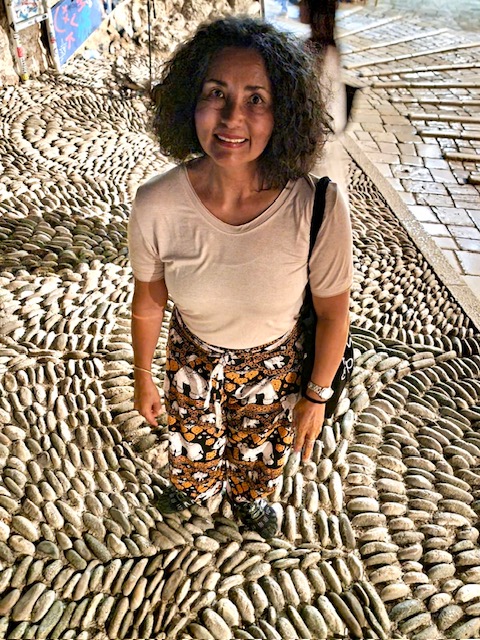
I explored the fortress, wandered through the Old Bazaar and admired the traditional stone houses. I could easily have spent hours discovering the city on foot — if only the afternoon heat hadn’t turned those beautiful cobblestones into an exhausting obstacle course – especially with thin soled barefoot shoes! 😊

Further south, at Butrint, history and nature seemed to merge into one. According to legend, the city was founded by refugees from Troy after the Trojan War. Archaeology tells a more complex story, beginning with its development as a Greek settlement. Today, this UNESCO World Heritage Site preserves more than 2,500 years of human history, surrounded by lush vegetation, water and the quiet beauty of its natural setting.

And then, the Ionian Sea.

The Ionian holds some of the deepest waters in the Mediterranean, including the Calypso Deep, which plunges more than 5,000 metres. Imagine what lies beneath that vast blue surface! My diver’s fantasy went wild…

After a delicious lunch, we swam in its wonderfully clear waters, with the dramatic coastline stretching around us. I wish I could share photographs, but I was far too busy floating in the waves, soaking up the moment and invoking the God of the Seas — Neptune, alias Poseidon.
For centuries, sailors entrusted their journeys to Poseidon, leaving offerings in the hope of safe passage and calm seas. I left a coin on the beach. One never knows when a little divine goodwill might come in handy. 😉

What stays with me most, though, is not any single monument or destination. It is the feeling of Albania itself — the mountains, the rivers, the forests, the sea. The way history and nature seem to accompany one another, and how often I found myself wanting to stop, look around and simply take it all in. And a final, wonderfully simple memory: being spoonfed freshly extracted honey by our beekeeper, Mr. Landi. Nothing quite like tasting a little sweetness straight from the source. 🐝

I came to discover a country. I left with a longing to return. I have a feeling Albania has only just begun to reveal itself to me. But there are still so many roads to wander, rivers to follow, mountains to cross and stories to hear.

#iamawanderer #Travelmaniac #Peopleandstories

Kosovo

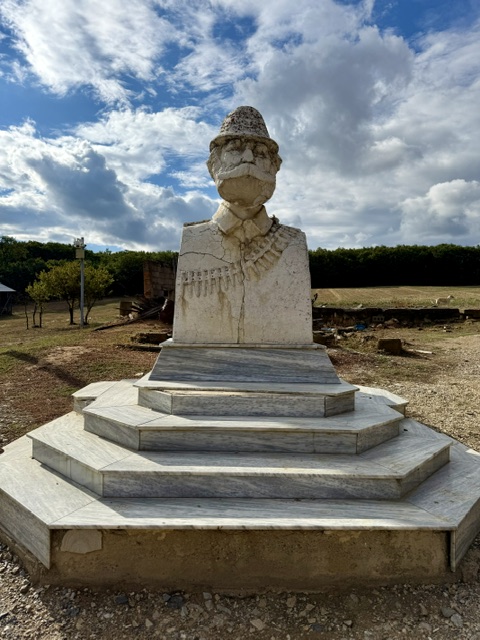
Visiting the Jashari Memorial Complex in Prekaz.

Adem Jashari has become a symbol of armed resistance and sacrifice for many Kosovo Albanians. He was a founder and commander of the Kosovo Liberation Army (UÇK/KLA), an ethnic Albanian guerrilla force that fought Serbian and Yugoslav forces during the Kosovo War (1998–1999), seeking Kosovo’s independence. It was formally disbanded in 1999. Its legacy remains deeply significant—and contested!—among Albanians and Serbs.

Listening to our guide, I understand that the Jashari family memorial in Prekaz is one of the most emotionally and politically significant places in Kosovo. What struck me most was the disturbing contrast:
the cemetery felt monumental and peaceful, while the bullet-scarred houses nearby made the violence painfully tangible.

Travelling through the Balkans, I find myself wondering why war and conflict seem to occupy such a large part of the story of these countries. Sitting on a stone bench outside the museum, my head started spinning:

”Why have the peoples of the Balkans fought each other so many times?”

The answer, of course, is not simple. The peoples of the Balkans have fought repeatedly over centuries — but they have also lived together for centuries.

Perhaps that is the fascinating part to remember while travelling here: a place can have been Ottoman, Serbian, Albanian, Yugoslav — and something else again — without its history ever belonging neatly to just one identity?

People have shared these lands, cities, markets, languages, food and traditions for generations, despite their differences.

So why did that coexistence sometimes break down so catastrophically?

I feel in my heart that the Balkans are so much more than their wars.

The Balkans are a rich tapestry of extraordinary food and music, Ottoman and Venetian influences, Orthodox and Catholic traditions, mosques and churches, mountains and rivers, ancient cities and — above all — generations of people, cultures and traditions woven together through centuries of shared history, sometimes harmonious, sometimes marked by conflict.

And, of course, the Illyrians — ancient tribes, fierce warriors, and a legacy that still echoes through the region. Many Albanians, including Kosovo Albanians, consider themselves descendants of these ancient peoples. While the precise historical and linguistic links remain debated, Illyrian heritage continues to hold a meaningful place in Albanian identity. It is one of the many threads connecting the present to a distant, fascinating past.
I love it when the Universe (or synchronicity) gets playful. The name of our eminent guide in Prishtina was Ilir — a name rooted in ancient Illyria, and carrying the spirit of freedom. The Albanian word i lirë means “free.”

The Balkans are so much more than the conflicts that have shaped their history. They are a place of extraordinary depth, where beauty and sorrow, memory and reinvention, seem to exist side by side.

I hope to return, with more time to listen to its stories, discover its hidden corners, and understand a little more of the many layers that make this part of the world so captivating.

The Balkans: a journey beyond the map.

I feel so much gratitude for my organised round trip through the Balkans.
It has given me wars and ruins, rivers and mountains, caves and bridges, baklava… and, of course, wine tasting. 😊

Until my trip to Albania in June, I knew very little about this part of the world. Since then, my curiosity has only grown.
And yet, there’s something I feel I missed on this journey. Something one won’t find on a map.

The people.

I want to sit with them.
Listen to their stories.
Get a little closer to understanding their why.
What does a tradition mean to the person who carries it?
What makes someone preserve it, generation after generation?
What memories, wounds, hopes and dreams lie beneath the things we call culture?
And how do patriotism, family values and resilience coexist in times of uncertainty and change?

For me, travelling is about more than discovering places. It’s about getting close enough to another person’s world to begin wondering why they see it the way they do.
Not to find all the answers, or to assume I could ever fully understand, but to listen, ask questions and allow my own perspective to shift.

Perhaps that’s the part of the Balkans I have yet to discover.
And perhaps it’s a good reason to return.

#TheBalkans #Travel #CulturalCuriosity #HumanConnection #LifelongLearning

Idisslar du?

Vi är medvetna om hur vi ska sköta vår kropp och vår hälsa, men hur noga är vi med att ta hand om våra tankar och känslor?

Vi borstar tänderna varje dag men hur vårdar vi vår psykiska hälsa, hur tar vi hand om vår själ? Psykisk ohälsa är en av de vanligaste anledningarna till sjukskrivning. Jag har ingen statistik att hänvisa till men jag är övertygad om att siffran har ökat under covid-månaderna. Med all osäkerhet, all ovisshet, all rädsla media har bombarderat oss med under en längre tid.

Ord och tankar är kraftfulla när vi tror på dem. Och när vi fokuserar och ältar på problem växer dem ännu mer i kraft och vi mår dåligt. När drömmar inte uppfylls, när det pågår ett missnöje under längre tid, när vi inte vågar bryta ett mönster, när vi får negativa tankar om oss själva, när vi inte vet vad framtiden har att ge. Det skapar en stress i knoppen och kroppen.

När vi skadar oss vet vi hur vi skall rengöra och plåstra om såret. Men hur plåstrar vi om våra känslor av sorg, ilska, ångest, ensamhet, oduglighet?

Skadar vi oss i handen så tar vi inte fram kniven och skär djupare i såret. Och ändå är det ofta det vi gör med våra mörka känslor. Vi ältar. Vi upprepar det som hänt (eller borde hänt men inte hänt) om och om igen. Vi återupplever det som redan gjort oss illa och låter inte själen få läka.

Du kommer aldrig klara det, det är för mycket/för svårt för dig
Du är dålig
Du duger aldrig till
Du är skyldig, det är alltid ditt fel att det strular
Ingen bryr sig om dig
Du är värdelös
Vem tror du att du är?
Du är ointressant
Men usch, vad du ser ut!
Du kommer alltid att vara ensam

Skulle du säga så till din bästa vän?
Så varför tänker vi något av dessa elaka påståenden om oss själva?
Och varför upprepar vi det om och om igen?

Ältande medför många negativa konsekvenser för såväl vår psykiska som fysiska hälsa. Det är ett försök (genom att tänka på det om och om igen) att hitta en lösning till ett problem som redan har skett. Onödigt eller hur? Vi vet att det är omöjligt att vrida tillbaka klockan. Att älta läker inte sår, snarare tvärtom, såren öppnas igen och igen och kanske istället blir infekterade och lämnar fula ärr.

Bara tankarna i sig är inte så farliga, det är när vi kopplar dem med känslor som de får makt över våra liv. Negativa tankar slösar bara med vår energi och kan göra oss fysiskt sjuka. Kroppen påverkas negativt när själen är otillfredsställd.

Fastnar du ofta i en ändlös spiral av oroliga tankar utan att hitta någon väg ut? Då är det kanske dags att ändra beteende. Om vi modigt och medvetet stannar till och känner efter vilka känslor som ligger bakom våra tankar och vårt ältande, om vi vågar stanna kvar i dessa känslor av oro, ångest, ilska, rädsla och ifrågasätter dem tillräckligt länge suddas de sakta ut och försvinner.

Här är några frågor vi kan ställa oss och som kan hjälpa oss gå vidare. Jag har testat, jag är en till och från ”idisslare” och jag vet att det funkar när jag vågar konfrontera mina tankar.

  • Är det något i det som har hänt som jag kan påverka och förändra?
    Om svaret är ja då ska du ta ditt ansvar och göra det som behövs. Om svaret är nej, då ska du släppa taget. När du har insett att det finns gift i glaset du håller i handen är det ditt val att antingen hälla ut innehållet eller fortsätta dricka och må dåligt.
  • Kan jag byta perspektiv och se på det som hänt med någon annans ögon?
    Kan jag ”tolka om” händelsen till något positivt?
  • Vad tjänar jag på att fortsätta älta? Varför vill jag fortsätta må dåligt?

Vi behöver se verkligheten som den är i sin helhet – med det goda och det mindre goda. Livets berg och dalbana med alla upp- och nedgångar och inte bara så som vi vill eller önskar att det är. Låt korna idissla, sluta älta. Det kräver mod, disciplin och mycket kärlek. Kärlek till andra men främst till sig själv. Och det är hälsosamt.

”Gud, ge mig sinnesro att acceptera det jag inte kan förändra,
mod att förändra det jag kan och förstånd att inse skillnaden.”
(Sinnesrobönen
)

Att förlåta är att älska sig själv

28156445_1845680198778243_8559597541476270080_n

Störst av allt är kärleken,

heter det med bibliska ord.

De flesta människor vill vara älskade, uppskattade, hörda och förstådda. Men förr eller senare händer det att vi sårar eller blir sårade, på ett eller annat sätt, fysiskt eller psykiskt, medvetet eller utan intention. Vi lever alla i relationer. Och vi är alla mänskliga. Så ofrånkomligen kommer vi att såra varandra, göra varandra besvikna och ledsna.

I mitt jobb som coach har jag träffat människor som inte kunnat förlåta sitt ex, sina föräldrar eller före detta vänner. Inombords är de upptagna av det som hänt i det förflutna och kan inte lämna och gå vidare. Min uppfattning är att de missuppfattat vad förlåtelsen innebär, den handlar inte om den andra personen. Den handlar om den som inte kan/vill förlåta.

Att förlåta innebär inte att vi går tillbaka och suddar bort det som varit – det handlar om att titta framåt för att kunna vara tillfreds med sitt liv. Förlåtelse handlar om acceptans och harmoni ochtar udden av det smärtsamma. Det möjliggör läkningsprocessen.

Kanske tror du att du kan ge igen och hämnas genom att inte förlåta? Men tänk om föremålet för dina negativa känslor inte påverkas alls? Tänk dig att du grubblar och minns gång på gång alla dessa mörka, kalla oförrätter samtidigt som ditt hatobjekt helt ovetandes och oberört lever sitt liv i glädje.

Vem är vinnaren då? Vem är det som har låst in sig i mörkret?

Ja, det är ju faktiskt du som upplever det du önskar att hen ska få uppleva. Och personen som sårat dig fortsätter att påverka dig men du har inget inflytande på hennes välbehag.

Förlåtelse är inte till för den som sårat dig. Det handlar inte alls om att acceptera den andra personens beteende. Det är en nödvändighet för ditt välmående och ett sätt att förbättra ditt liv.När vi förlåter tillåter vi oss själva att släppa både hatet mot människor som gjort oss illa, och blytunga offerkoftan som vi svept runt våra axlar. Och vem vet, det som skedde kanske inte menades illa men det blev ett missförstånd?

Måste man verkligen förlåta allt?

Ingen kan kräva att bli förlåten och förlåtelsen är någonting som man blir färdig för när den tiden är kommen.Det är inte lätt att glömma och förlåta och den vi är hårdast mot är ofta oss själva. Det är svårt att vara lycklig om man går runt och är ångerfull, ledsen, bitter eller arg.

Innan du kan förlåta någon annan måste du förlåta dig själv, det gäller att inse att du bara är mänsklig – och alla vi människor felar.

Att förlåta sig själv handlar om att först ta ansvar och sedan lägga upp en handlingsplan för förändring av det vi inte vill ha i vårt liv, oavsett om det är vi som är orsaken eller den som drabbats. Handlingsplan låter svårt och det behöver inte vara. När vi fokuserar på det vi vill ha mer av tar vi avstånd från det vi inte vill ha kvar. Vi kan välja våra tankar. Vi kan välja våra känslor.


Att förlåta är en mycket kraftfull handling som har sina rötter i kärlek. Många konflikter på alla nivåer har sitt ursprung i oförmåga till förlåtelse.

Att förlåta är en kärlekshandling. Och den bästa presenten till andra och till oss själva (årets julklapp?) är kärlek.


”Den som inte är beredd att förlåta andra förstör den brohan en gång själv måste över.”
Francis Bacon


God Jul!

Hemligt.

De allra flesta av oss bär på hemligheter av olika slag. Några mindre, andra större. En hemlighet kan vara så ofattbar och skrämmande att vi inte vågar berätta om den för någon. För att undvika omgivningens kritiska blickar och kommentarer eller för att skydda någon annan.

Vi vill så väldigt gärna framstå som bra inför andra och inför oss själva att vi bygger upp tjocka murar kring de tankar, känslor och beteenden som vi tror kan fläcka ner idealbilden om de avslöjas.

Ibland kan det även vara bra att hålla tyst om saker för att skydda andra. Vi kan ha en hemlighet som vi inte tänker avslöja i första taget. Den handlar inte om oss utan om en annan person. Att medvetet dölja vissa saker kan alltså vara ett rationellt beslut. Samtidigt bör vi ta med i kalkylen att hemlighållandet ofta har ett pris, fysiskt och psykiskt.
Rädslan att hemligheterna skall komma fram utan att vi själva valt det är en stor rädsla. Rädslan gör att vi hela tiden är på vår vakt, tankarna kan helt plötsligt skena iväg och vi får upp bilder i huvudet från sådant som vi har gjort för oftast många år sedan. Minnen och känslorna fastnar i kroppen och kan oväntat besöka oss i drömmarna eller göra sig påminda i form av fysiska åkommor.

Priset vi betalar för att bära hemligheter är ibland högt och kan fysiskt och psykiskt skada oss. Samtidigt som hemligheter kan bryta ner oss, finns det stora hälsovinster att göra om vi istället öppnar våra hjärtan. Men kom ihåg att hemligheter kan föda fler hemligheter. Det kan vara bra att dela med någon som är utbildad för att ”bära” och hantera andras hemligheter, en präst, en terapeut, en läkare, någon med tystnadsplikt.

Ibland kan det vara lättare att våga möta vår rädsla för vad andra tycker än att möta vår egna spegelbild och våga förlåta oss själva för saker vi har tänkt, gjort, sagt men inte kan förlika oss med. Det tycker jag är en till anledning att vara generös med förlåtelse för den som har felat lever dagligen med minnet av det hen gjort medan ”offret” kan välja att förlåta och glömma. Det är oftast lättare att förlåta andra än att förlåta sig själv, andras misstag kan vi släppa tag om och lämna bakom oss men vi måste leva resten av livet med oss själva.

“A secret’s worth depends on the people from whom it must be kept.”
Carlos Ruiz Zafón, The Shadow of the Wind

The day I was born

the sky was clear but my mother’s heart was full of clouds.

January starts off the wet season, February is its peak. Heavy downpours stretch up and down our island and the risk of devastating cyclones is high. Dirt tracks become thick mud, making driving and walking difficult and long, sometimes near impossible. And it was even the way I chose to enter the world, through a long and difficult labour, the umbilical cord around my forehead and neck.

They told me that’s how I started killing my mother.