
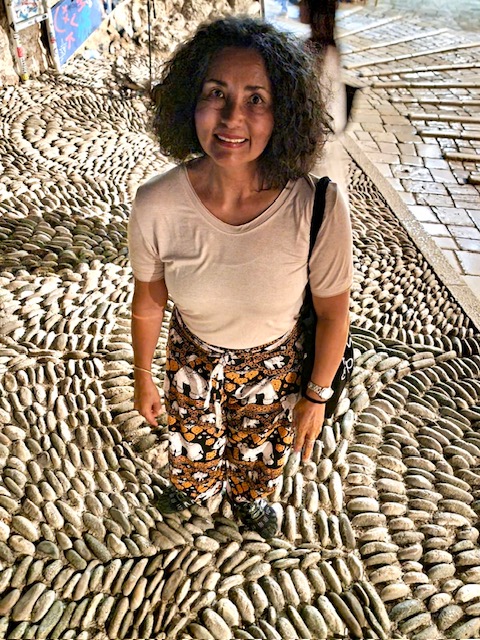
I’m getting ready for my next trip, and somewhere beneath the excitement, I feel a small tremor of apprehension.
It’s unusual for me.
Normally, I cannot wait to be at the airport, carried along by the thrill of new places, new faces, new stories.
The butterflies of adventure are usually enough to drown out everything else.
But this time, something else seems to be flying among them.
A quieter kind of butterfly.
Something I can’t quite name.
I don’t know what I’m afraid of…
And perhaps that is what makes it unsettling.
What are you afraid of?
I have learned never to judge someone by the way they deal with fear.
Some people retreat into silence, almost paralysed by it.
Others step out into the world, smile, carry on, and pretend everything is fine. They are scared, but they do it anyway.
We rarely know what is happening beneath the surface.
We don’t know what someone is carrying.
We don’t know what fear is asking them to protect.
Perhaps courage doesn’t always look like fearlessness.
Sometimes it looks like taking the next step with trembling hands, without even knowing exactly what you are afraid of.
Fear can make us withdraw.
Fear can make us run.
Fear can also make us act.
We rarely know what is happening beneath the surface.
We don’t know what motivates someone’s behaviour.
We don’t know what fear they are carrying.
And sometimes, the person who looks the bravest is simply the one who has learned how to move forward while being afraid.
Fear can be a liar.
It takes what happened in the past and projects it onto the future, making us believe that because something happened once, it will happen again.
Fear can make us abandon dreams before we have even given them a chance.
It can narrow our view of the future until all we can see are the things that might go wrong.
Fear is not only a dream killer.
It can be a leadership killer.
We may see confidence, control, silence or even aggression — but we don’t always see the fear underneath.
Fear of failure.
Fear of losing control.
Fear of being rejected.
Fear of not being good enough.
When fear takes the driver’s seat, we stop listening, stop trusting, avoid difficult conversations and make decisions from self-protection rather than purpose.
Perhaps good leadership starts with understanding that fear has a seat at the table — but it shouldn’t be the one making the decisions.
Good leadership doesn’t require the absence of fear.
It requires the courage to notice it — and not let it decide.
Because fear also has a purpose.
It is trying to protect us.
So perhaps we don’t need to fight it.
Invite fear to sit with you.
Listen to what it has to say.
Thank it for trying to keep you safe.
And then decide for yourself whether you still want to follow it.
Because fear is not a prophecy.
It is a feeling.
And sometimes the bravest thing we can say to fear is simply:
I hear you. Thank you. But I’m okay.
I shall pack now ❤️

